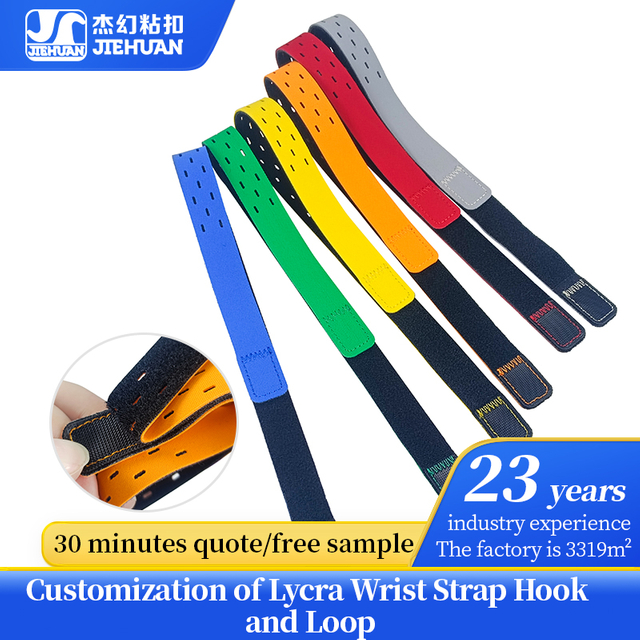
An adjustable arm band that holds a heart-rate sensor on the upper arm, where an optical pod can read through the skin without the strap crossing the chest. The band closes with hook and loop, so the wearer sets the tension once and re-tightens it as the arm moves without touching a buckle.
An upper-arm position keeps the sensor clear of chest straps, sports bras and harnesses, and it is easier to fit on your own than a chest belt. For optical sensors the limiting factor is contact: a hook and loop band can be tightened in small increments anywhere along the loop face, which is what holds the pod flat against the arm through a session.
The band is supplied as a component, not a fixed catalogue item. Arm circumference range, band width, colour, edge finish and the way the pod cradle is joined to the band are all agreed at sample stage. Send the pod outline and the arm size range you need to cover, and the band is built to that drawing.
| Item | Specification |
| Closure | Hook and loop, re-openable, continuously adjustable |
| Fit range | Set to your arm circumference range at sample stage |
| Sensor mounting | Band-to-cradle assembly made to your pod drawing |
| Customization | Width, length, colour, logo and assembly to order |
| Order basis | Made to order; samples available for fit testing |
The band is normally built from nylon hook and loop tape with an elastic or heat-sealed loop fabric against the skin. For wearable programmes see smart wearable solutions; for team and fitness use see sports solutions.
Will the band slip down the arm during running? Arm bands stay in place through contact pressure rather than buckle tension, so the usual fix for slippage is a wider band or a shorter adjustment range, not a tighter closure. Send us the arm range and the activity profile and we will size it accordingly.
Can one band cover both arm and wrist use? Only where your sensor accepts both positions and the circumference ranges overlap. If they do not overlap, two lengths are normally cheaper than one band that fits neither position well.
How is the pod attached to the band? Stitching, welding or adhesive, depending on the substrate you specify. Tell us the pod material — a hard plastic shell and a soft housing need different joining methods.
Can we order samples before production? Yes. Samples are made against your drawing so the fit can be tested on real users before the order is placed.
Upper-arm bands are chosen when the sensor has to stay out of the way of kit that is already being worn — a chest belt, a race number, a backpack strap or a rifle sling. These are the situations where an adjustable arm band is normally specified instead of a chest strap.
Optical heart-rate pods on the upper arm are less affected by arm swing than a wrist unit, and the band does not interfere with a chest belt worn for another purpose. The closure is adjusted once before the session and re-tightened on the move without stopping.
When one coach fits a squad, a band that closes by pressing is faster and less error-prone than threading a buckle, and a single length covers several arm sizes — useful where bands are handed out and collected after each session.
Upper-arm placement is used where chest straps are unsuitable, for example with mobility aids, post-operative dressings or patients who cannot fit a chest belt unaided. A band the patient can close one-handed is easier to keep in place over a longer monitoring period.
Arm bands are often the last component to freeze because the pod enclosure changes late in development. Made-to-order bands let length, width and colour change without new tooling, so a late enclosure revision does not restart the project.
Pod outline, weight, and how the band should attach (cradle, stitched tab, welded sleeve)
Arm circumference range, including the smallest and largest user you must cover
Whether the skin side needs a specific fabric, edge finish or colour
Target quantity and whether bands ship loose or assembled to the pod
Base materials are on the nylon hook and loop tape page; die-cut and assembly work runs through the converting service.
VS Standard Polyester Hook & Loop:
300% better UV resistance (QUV accelerated test)
90% low-temperature tack retention (-30℃ verified)
48-Hour Rapid Prototyping (9 adhesive options tested free)
Global DDP Logistics (NA/EU/SEA/OC/SA/AF)
24/7 Engineer Support