
Views: 0 Author: Site Editor Publish Time: 2026-11-25 Origin: Site


The China Garment Association's review of January–September 2026, published on 18 November, puts two numbers side by side. Apparel output rose 2.54% year on year. Profit at above-scale apparel enterprises fell 15.63% to CNY 21.95 billion, on revenue of CNY 730.06 billion, itself down 4.24%. The sector's operating margin sits at 3.01%, and 28.76% of above-scale enterprises were loss-making — 2.23 percentage points worse than a year earlier.
Fixed asset investment in the sector fell 9.9%. That is the part suppliers should read twice. When brands and factories stop expanding capacity, they manage risk by holding less stock, not more. Less stock in the pipeline means smaller first orders and more frequent replenishment, which lands on the trim supplier's quotation sheet as a lower MOQ, a shorter sampling cycle and a longer list of shades.
The export side tells the same story from another angle. Apparel and clothing accessory exports reached USD 120.69 billion, up 4.8%, but the volume grew faster than the value: 28.68 billion pieces, up 7.3%, at an average unit price of USD 3.5, down 2.5%. More pieces, less money per piece. Buyers are sourcing more styles at lower values, and every style change pulls hook and loop specification, width and shade along with it.
Two structural numbers matter for fastener specification. Knitted apparel accounted for 69.8% of output and grew 2.57%. Sportswear, including ski wear, saw export value rise 24.7%, and apparel exports to the United States reached USD 29.04 billion, up 20.1%.
Knits and sportswear share a property that changes what you specify: they stretch. A hook and loop closure on a stretch knit needs an elastic or soft-face loop, a narrower tape, and a shade that survives repeated wash. On a woven shell the same closure can be wider and stiffer. If a buyer is shifting volume into knits and activewear, the fastener brief changes even when the order quantity per style does not.
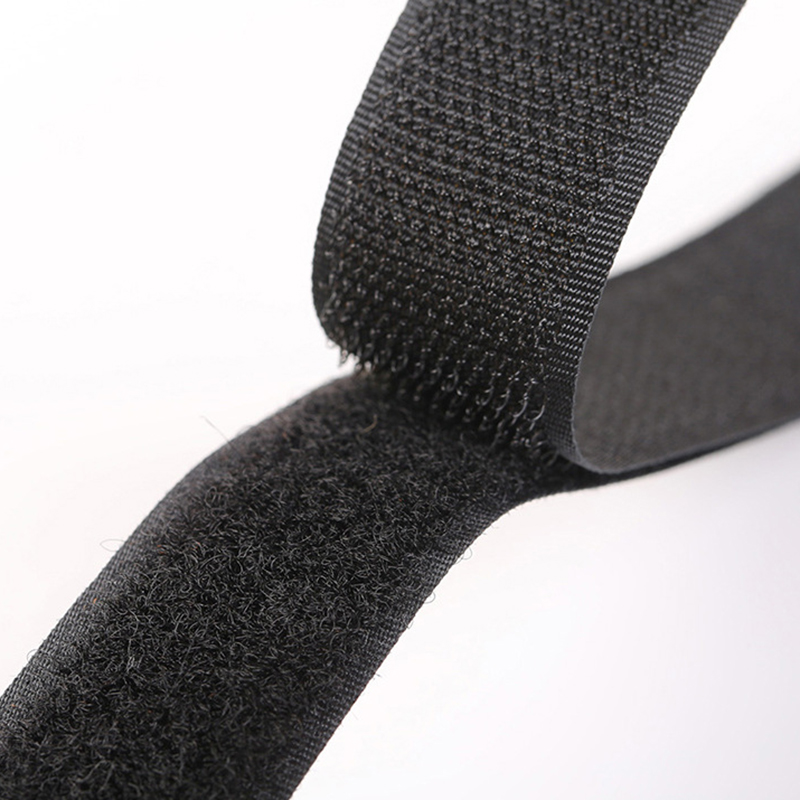
Hook face and loop face: the loop side sets how much stretch a closure can absorb.
Four things move at once, and they interact.
Order quantity per shade, not per item. A buyer who used to place 20,000 metres in black now places 3,000 metres each in four shades. Total volume is similar; the number of setups is four times higher. MOQ has to be discussed per shade and per width, not per article.
Sampling frequency. More styles means more prototype rounds. A sampling cycle that runs two weeks per round becomes the bottleneck when a brand runs six styles in a season.
Shade control. Small dye lots drift more than large ones. ΔE tolerance needs to be agreed before the first bulk lot, and the reference standard has to be a physical swatch, not a photo.
Replenishment lead time. With less stock in the pipeline, a hot style needs a second shipment in weeks, not months. That works only if the supplier holds semi-finished roll stock rather than finished cut lengths.
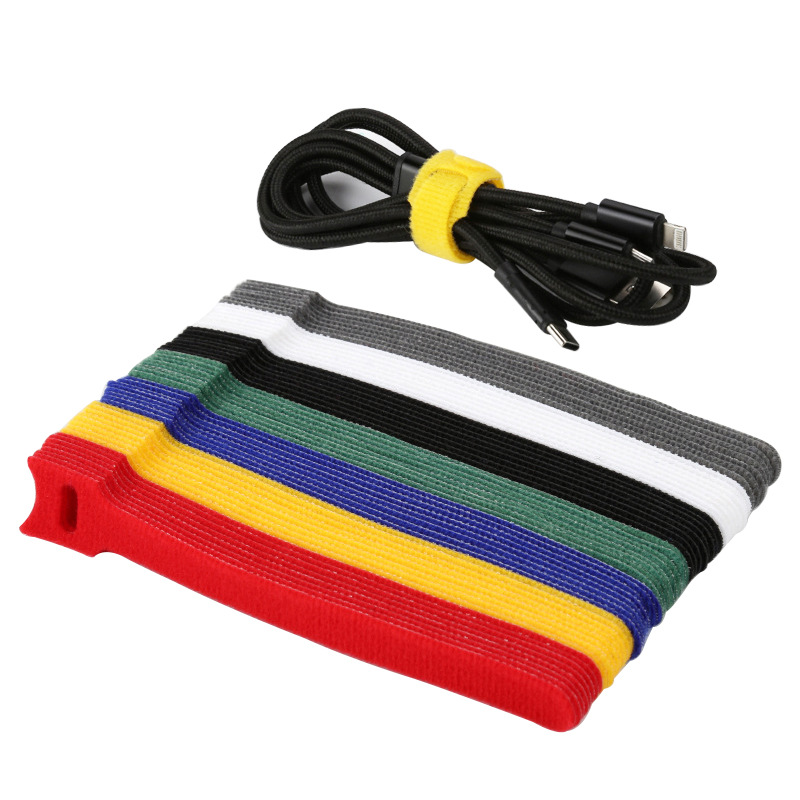
Six shades from one production run: shade range is agreed before the first bulk lot.
Three clauses carry most of the value in a small-batch programme:
Buyers who put these three into the purchase agreement stop discovering them at the fourth style of the season.
We publish our width range, adhesive and heat-seal options and test data on the product pages rather than in a single MOQ headline, because the useful number depends on shade and width. If you are re-planning a 2027 programme around smaller first orders, send the style list with widths and shades and we will quote per shade rather than per article.


