Views: 0 Author: Site Editor Publish Time: 2026-10-21 Origin: Site


On 10 October 2026, a REACH restriction on PFHxA started to apply to clothing and footwear placed on the EU market. For suppliers of hook and loop, the practical question is not whether the tape itself is a chemical product — it is whether anything in the construction, finish or adhesive could bring restricted substances into a finished garment or shoe.
This article summarises what the regulation says and sets out a supplier-side checklist. It is an information summary, not legal advice; the official text prevails.
Commission Regulation (EU) 2024/2462 amends Annex XVII to Regulation (EC) No 1907/2006 (REACH) and adds an entry restricting undecafluorohexanoic acid (PFHxA), its salts and PFHxA-related substances.
The limits, measured in homogeneous material, are:
25 ppb for the sum of PFHxA and its salts
1,000 ppb for the sum of PFHxA-related substances
Above those concentrations, the affected articles may not be placed on the EU market or used. The measurement basis matters: it is the homogeneous material, not the finished product as a whole, so a small coated component can exceed the limit even when the whole assembly would pass on average.
The restriction is phased in by product group rather than switched on at once:
Date | Scope |
|---|---|
10 October 2026 | Clothing and footwear, and related consumer articles in that group |
10 October 2027 | Other textiles, leather, furs and hides for the general public, including home textiles |
There is also a transition rule that matters commercially: articles placed on the EU market before the relevant date are not caught by the new paragraph. In practice that means existing stock can still be sold, but anything newly placed on the market from 10 October 2026 must meet the limits. For an exporter, "placed on the market" is the trigger — the shipment date is the evidence that usually gets examined.
Hook and loop tape is normally made from nylon, polyester or polypropylene, none of which requires fluorochemistry. That is a fair starting point, but it is not the end of the review. The risk points sit around the tape rather than in the yarn:
Water- and stain-repellent finishes. Loop fabric sold for outdoor, medical or automotive use is sometimes treated for water repellency. Some of those treatments are fluoropolymer-based.
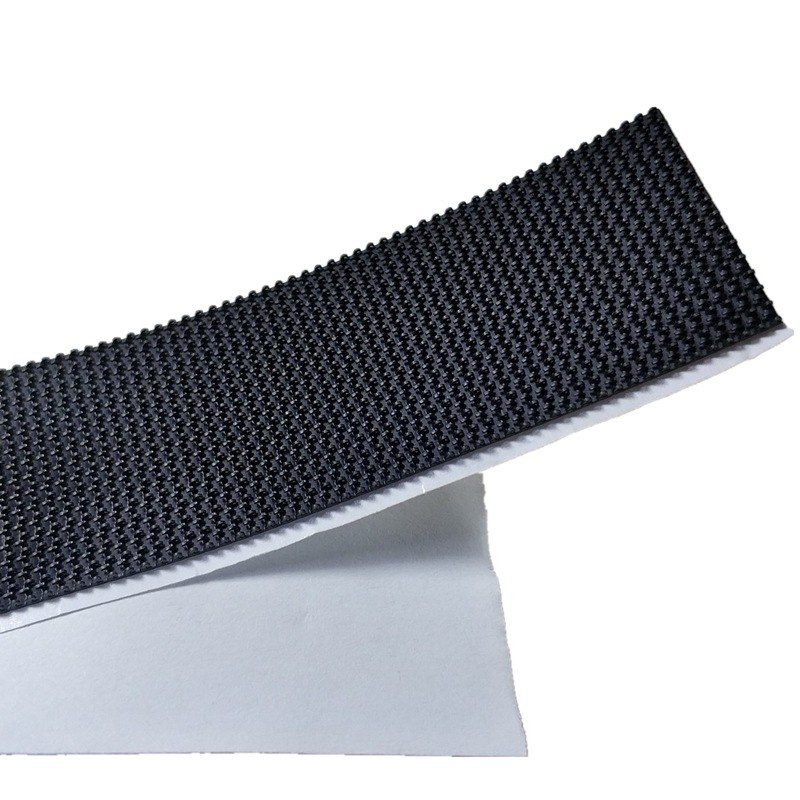
Adhesive systems and release liners. Adhesive-backed tapes are a multi-layer construction. The adhesive, primer and liner are separate homogeneous materials, each assessed on its own.
Dyes and finishing auxiliaries. Wet-processing aids are a common route for trace contamination, and they are rarely visible on a spec sheet.
Secondary operations. Lamination, coating, printing and flame-retardant finishing performed by subcontractors add their own inputs.
A declaration that says "PFAS-free" is a start, but it is not a review. A workable supplier checklist looks like this:
Split the BOM by homogeneous material. Tape, adhesive, liner, coating, thread and any treatment should each be listed with its own supplier.
Ask for a substance statement per material, naming PFHxA and PFHxA-related substances specifically, not PFAS in general.
Request test reports where a treatment or coating exists, and check the reporting limit is below 25 ppb — a report quantified at 100 ppb cannot demonstrate compliance.
Keep batch traceability linking finished rolls to the material lots and to the treatment supplier, so a single flagged lot does not put a whole season at risk.
Re-confirm after any process change. A new liner, a new water-repellent finish or a new subcontractor resets the assessment.
"Hook and loop contains no fluorine, so we are exempt." The tape may be clean while the finish, liner or adhesive is not. The restriction applies per homogeneous material, not per product family.
"Our finished product passed, so we are fine." A whole-article average can hide a small component that exceeds the limit on its own.
"Old stock covers new orders." The carve-out protects articles already placed on the market. Newly placed goods after the date need their own evidence.
The restriction does not ban hook and loop, and it does not assume that hook and loop is contaminated. For most standard nylon and polyester tapes with no water-repellent finish and no specialty adhesive, the exposure is low. The work is documentation: know which materials are in the construction, and be able to show it.
If you are specifying tape for EU apparel or footwear programmes, it helps to settle the material list early — width, yarn and adhesive choice are usually decided long before compliance paperwork is requested. Our sizing guide covers the specification side, and the waterproof adhesive tape page shows how a multi-layer construction is documented for wet environments.
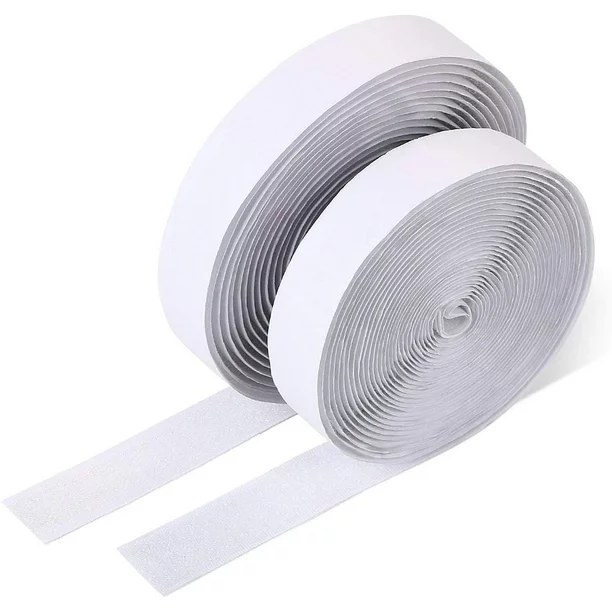
Start with the two questions a buyer will ask: which homogeneous materials are in this roll, and which of them carries a treatment or an adhesive. If the answer is "none", a short declaration is usually enough. If the answer includes a finish or a specialty adhesive, get the statement and the report before the purchase order, not after. For standard constructions, see our 100% nylon hook and loop tape range.