
Views: 6 Author: Site Editor Publish Time: 2026-09-08 Origin: Site


Medical and wearable devices fail in public. A heart-rate strap that slips mid-workout, a blood-pressure cuff that cannot be tightened one-handed, a VR headset that digs in during a long session — none of these are catastrophic, and all of them end up in the return bin or the "doesn't fit" review. Behind most of these failures is a surprisingly small component: the closure. When a device touches skin for hours, its fastening system stops being a trim detail and becomes part of the clinical or user experience.
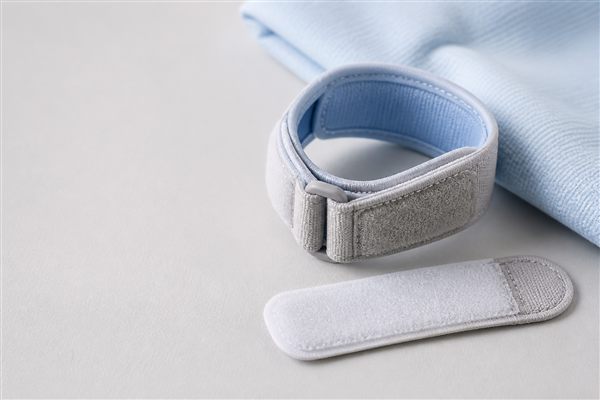
Why hook and loop is the default in this category
The micro fasteners market — the segment that includes hook and loop used in small, precise devices — reached nearly USD 3.07 billion in 2025, with medical devices ranked as its fastest-growing end-use segment (ResearchAndMarkets / The Business Research Company, 2025). Meanwhile, the adaptive clothing market, which relies heavily on hook and loop closures, is estimated at USD 2.5 billion in 2025 with roughly 9.8% annual growth through 2033 (Reports Insights, 2025).
Hook and loop earns that position because it delivers four things medical and wearable designers need simultaneously:
Infinite adjustability — one strap fits a range of limb sizes, head sizes or body shapes without discrete sizing steps.
One-handed, tool-free operation — critical for elderly users, patients with limited dexterity, and athletes mid-workout.
Soft, breathable skin contact — woven nylon and loop fabrics are far gentler against skin than buckles or rigid clips.
Reusability across a product's life — closures can be opened and closed thousands of times without losing grip.
Where the requirements get demanding
Not all hook and loop is equal in medical-grade work. The applications that stretch suppliers hardest:
Heart-rate and vital-sign straps. Straps must hold sensors in stable skin contact during motion while remaining comfortable for continuous wear. This favors narrower elastic or woven tapes with consistent tension — and it is why Jiehuan produces dedicated heart-rate strap constructions rather than cutting down commodity tape.
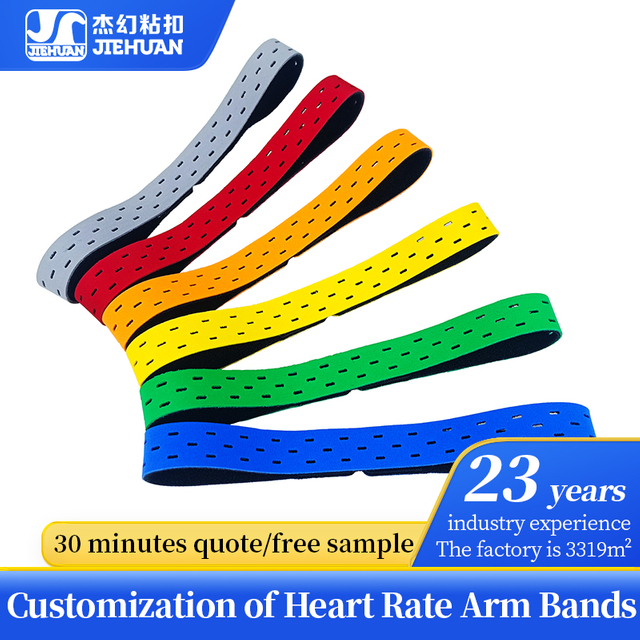
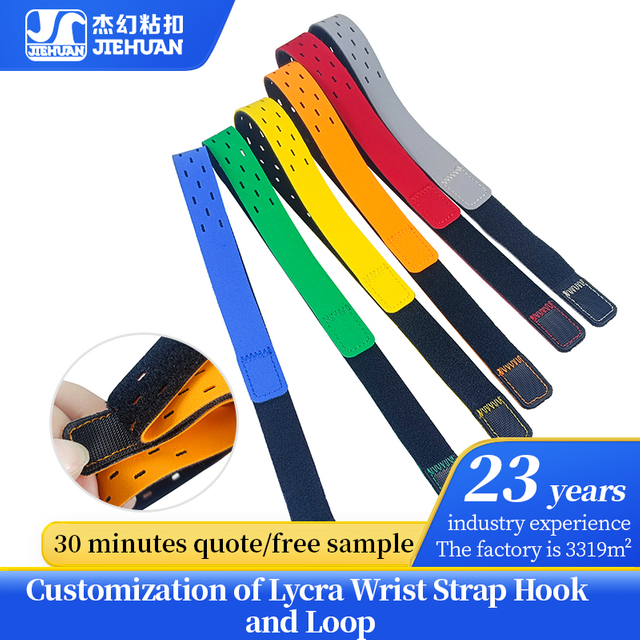
Head-mounted and eye-mask devices (VR/AR, sleep masks, therapy masks). Bands here must distribute pressure evenly, avoid hair entanglement, and survive repeated adjustment. Jiehuan's head-mounted and eye-mask strap systems are covered by multiple utility-model patents in China — the kind of application-specific engineering buyers should expect from a fastener partner, not just a tape seller.
Rehabilitation and compression supports. Closures must hold under elastic tension while allowing the wearer to adjust tightness independently.
Sensor patches and hygiene products. Here, unnapped (smooth) loop surfaces reduce skin irritation and fiber shedding, and laser-cut or welded edges prevent fraying — a genuine concern in clean and clinical environments.
What buyers should specify for medical and wearable use
When sourcing hook and loop for a device that touches skin, put these in your RFQ:
Construction and edge finishing. Specify sew-on, adhesive-backed, heat-sealed or molded — and ask how edges are finished (laser cutting, heat-sealing, ultrasonic welding) to eliminate fraying and loose fibers.
Skin-contact material. Unnapped or brushed loop surfaces for comfort; certified low-irritant materials where skin contact is continuous.
Cycle life. Demand documented open-close cycle data for closures meant to last the life of the device.
Compliance package. ISO 9001 process certification, RoHS/SGS restricted-substance compliance, and material traceability documents for your regulatory file.
Customization. Width, color, backing, adhesive, die-cut shapes, and even co-engineered strap assemblies — a supplier that can engineer the whole fastening sub-system shortens your development cycle.
The design principle
The best fastening system on a wearable is the one the end user never notices. If the strap holds, breathes, and disappears into the experience, engineering has done its job. That outcome is decided less by clever hardware than by small, well-specified components — which is exactly why medical and wearable manufacturers should qualify their hook and loop suppliers with the same rigor they apply to sensors and batteries.
Jiehuan Hook and Loop (Dongguan Jiehuan Electronic Technology Co., Ltd.) is a national high-tech enterprise specializing in adhesive-backed, heat-sealed, back-to-back, unnapped-loop and molded hook and loop, including heart-rate straps and patented head-mounted/eye-mask fastening systems for medical and wearable customers worldwide.
Sources
ResearchAndMarkets / The Business Research Company, Micro Fasteners Global Market Opportunities and Strategies (2025): https://www.researchandmarkets.com/reports/6264562/micro-fasteners-global-market-opportunities (retrieved Sep 8, 2026)
Reports Insights, Adaptive Clothing Market Size, Share & Trends 2033 (2025): https://www.reportsinsights.com/industry-forecast/adaptive-clothing-market-701927 (retrieved Sep 8, 2026)


