
Views: 2 Author: Site Editor Publish Time: 2026-09-22 Origin: Site


On September 8–9, the National Standardization Technical Committee for Industrial Textiles (SAC/TC606) held a review meeting in Dalian. More than 120 delegates examined nine standard projects; eight passed review, and the committee also deliberated a proposal to set up a new sub-technical committee for interlining materials.
For anyone buying or manufacturing hook-and-loop fasteners, the list is worth five minutes: none of the eight is a hook-and-loop standard — but three of them point directly at lines that matter for this industry.
1. Polyoxymethylene (POM) fiber ropes
2. Nonwoven fabrics and bags for fruit protection
3. PVC/PET-coated yarn woven fabric
4. Cut-resistant fabric
5. Hemp-fiber core material for mattresses
6. Color masterbatch for polypropylene spunbond nonwoven fabric
7. Polyglycolide (PGA) and its copolymer fibers for surgical sutures
8. Fiber filtration media for gas purification (national standard)
At the same meeting, the committee also deliberated the proposed creation of a sub-technical committee for interlining materials.
Committee chair Li Lingshen set four directions: demand-driven priorities, innovation enablement, cross-domain collaboration, and full life-cycle standards management. Those four phrases are the key to reading the three signals below.
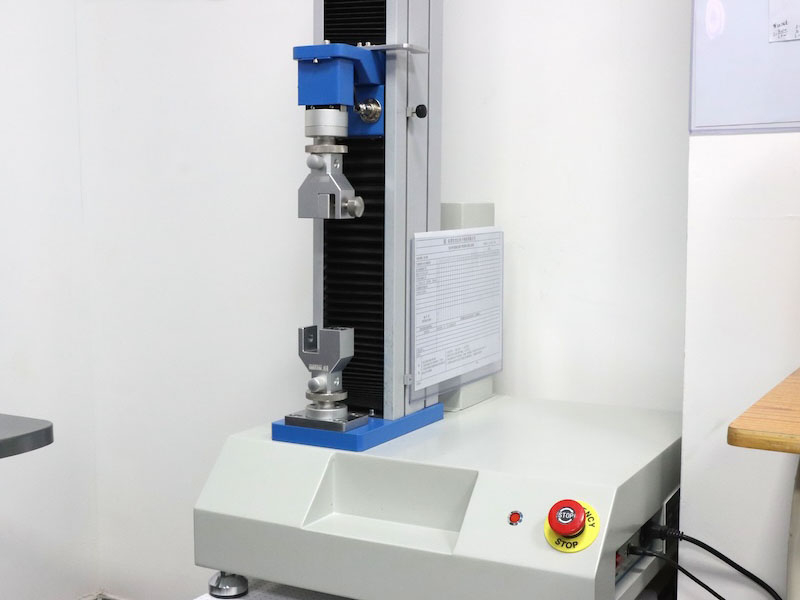
Tensile strength tester — Jiehuan lab
The fruit-protection nonwoven and PP spunbond color-masterbatch items are the two closest to hook-and-loop.
A color masterbatch standard is really a standard for color consistency, lightfastness and batch stability in spunbond nonwovens — it lifts “factory-to-factory agreements” into testable, auditable requirements. The nonwoven hook face of hook-and-loop tape, and the spunbond/meltblown substrates used across the category, sit on the same nonwoven technology chain. If color masterbatch is being standardized for one nonwoven application, it is only a matter of time before similar color-fastness and batch-tolerance checks appear in hook-and-loop specifications.
For buyers: consider writing “masterbatch batch consistency and color-fastness test method” into supplier quality agreements. Factories such as Jiehuan can be asked for shade-batch records as standard practice.
The PGA surgical-suture fiber standard is the most medical-facing of the eight.
Polyglycolide and its copolymers are the mainstream resorbable suture system. Giving medical fibers their own national standard means raw-material specs, test methods and compliance documentation for medical-grade textiles are being systematized layer by layer.
For hook-and-loop, this points at medical fastening: wound-dressing fixation, ECG electrode and lead placement, and straps for home medical devices. As upstream fiber standards firm up, the consistency and biocompatibility expectations for these applications will tighten with them. Procurement teams in medical should start asking suppliers for upstream fiber-standard conformity evidence.
Jiehuan’s test capabilities (tensile, fatigue, temperature-humidity chamber) and its work tracking GB/T 23315-2026, the revised Chinese hook-and-loop national standard (effective August 1, 2027), are built for exactly this kind of requirement.
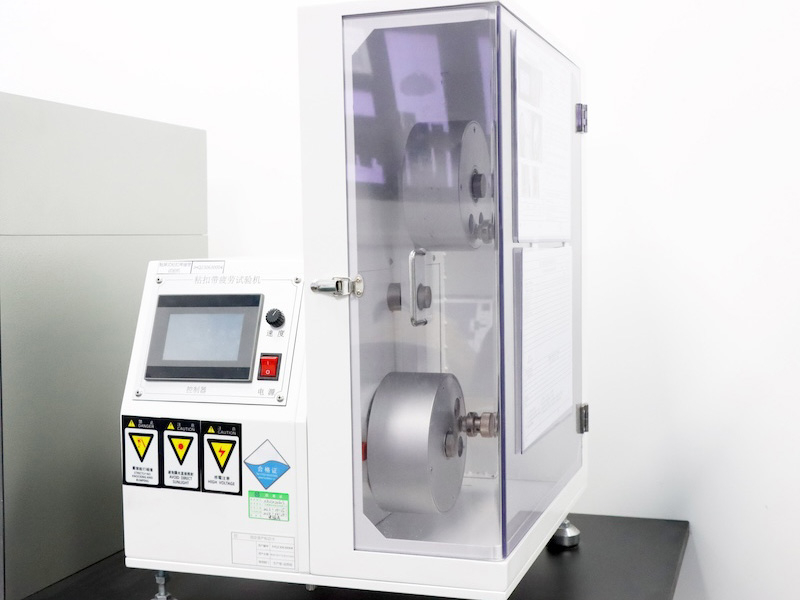
Hook and loop fatigue tester — Jiehuan lab
Cut-resistant fabric (personal protection) passing review, plus the proposed interlining sub-technical committee, tell one story: industrial-textiles standardization is moving from broad categories into fine sub-domains.
A sub-technical committee is a dedicated “department” inside the standards system. Interlining is a high-volume field that long lacked dedicated standards; its formalization shows sub-domain standardization is now an acknowledged priority.
The practical implication for hook-and-loop: niche applications — medical, automotive, protection, electronics — will increasingly have standards you can cite, test against and write into contracts. In standardized fields, early compliance becomes a durable competitive moat for suppliers.
· GB/T 23315-2026 (Hook-and-loop): the revised product standard for hook-and-loop fasteners — published 2026, effective August 1, 2027;
· GB 4287-2026: the textile dyeing and finishing wastewater discharge standard — fully covering new production capacity from September 1, 2026.
This batch of eight sits upstream (fibers, masterbatch, medical materials) and in adjacent fields (protection, filtration). Together, the picture is completing: product standard + environmental threshold + raw-material and medical compliance for hook-and-loop.
1. Track the official publication texts and effective dates of the eight standards (passing review ≠ publication; watch the SAC gazette);
2. Fold “masterbatch batch consistency” and “medical-fiber conformity” into supplier quality agreements and incoming inspection;
3. Prioritize niche lines (medical / automotive / protective) against sub-domain standards — the more specific the standard, the more stable the orders for suppliers who comply first.
Jiehuan (Dongguan Jiehuan Electronic Technology Co., Ltd.) keeps tracking GB/T 23315-2026 and the new standards’ implementation, and supports hook-and-loop R&D, customization and testing. Contact Jiehuan for samples and specifications.
References
SAC/TC606 secretariat (Zhongfangbiao): “Review meeting for 9 national/industry standards held in Dalian”, 2026-09-11 https://news.10jqka.com.cn/20260911/c679835929.shtml
Related reading: packaging specifications, test equipment and specifications for a quote.


