
Views: 1 Author: Site Editor Publish Time: 2026-11-09 Origin: Site


When a sterilization validation runs into trouble, the complaint often lands on the hook and loop closure: the colour shifted, the hook face went brittle, the adhesive let go, or the packaging would not let the gas through. None of that is incidental. The material, the lamination layer and the packaging are all exposed to the same heat, moisture and chemistry at once. Here is how the three common routes affect a closure, and what to confirm with a supplier before production.
Hook and loop rarely goes into the chamber on its own. It is part of a sterilization unit together with the device, a thermoformed tray and a porous lid or Tyvek-style sheet. So judge the closure inside its real construction: sewn into a fabric part, adhesive-bonded to a plastic housing, or packed as a stand-alone strap. The same tape can pass in one build and fail in another. A sewn strap with a stable yarn and dye carries far less risk than an adhesive-backed strip bonded to a plastic shell.
Ethylene oxide (EO) is chemical inactivation. It depends on temperature, humidity and gas concentration to penetrate, and residual desorption is the critical step. Gamma irradiation deposits energy and breaks polymer chains, so colour and mechanical properties shift more visibly. Steam is moist heat under pressure, which mainly tests heat resistance, hydrolysis resistance and dimensional stability. Because each route acts on a different failure path, data from one cannot be applied to another.
Nylon absorbs more moisture, so dimensions and strength move more under moist heat. Polyester generally resists hydrolysis and irradiation better, but dye systems vary widely in radiation stability. PP molded hook is chemically stable, with the trade-off of a lower temperature ceiling and more distortion under steam. Set the sterilization route first, then the material, rather than choosing a product and asking the process to accommodate it.
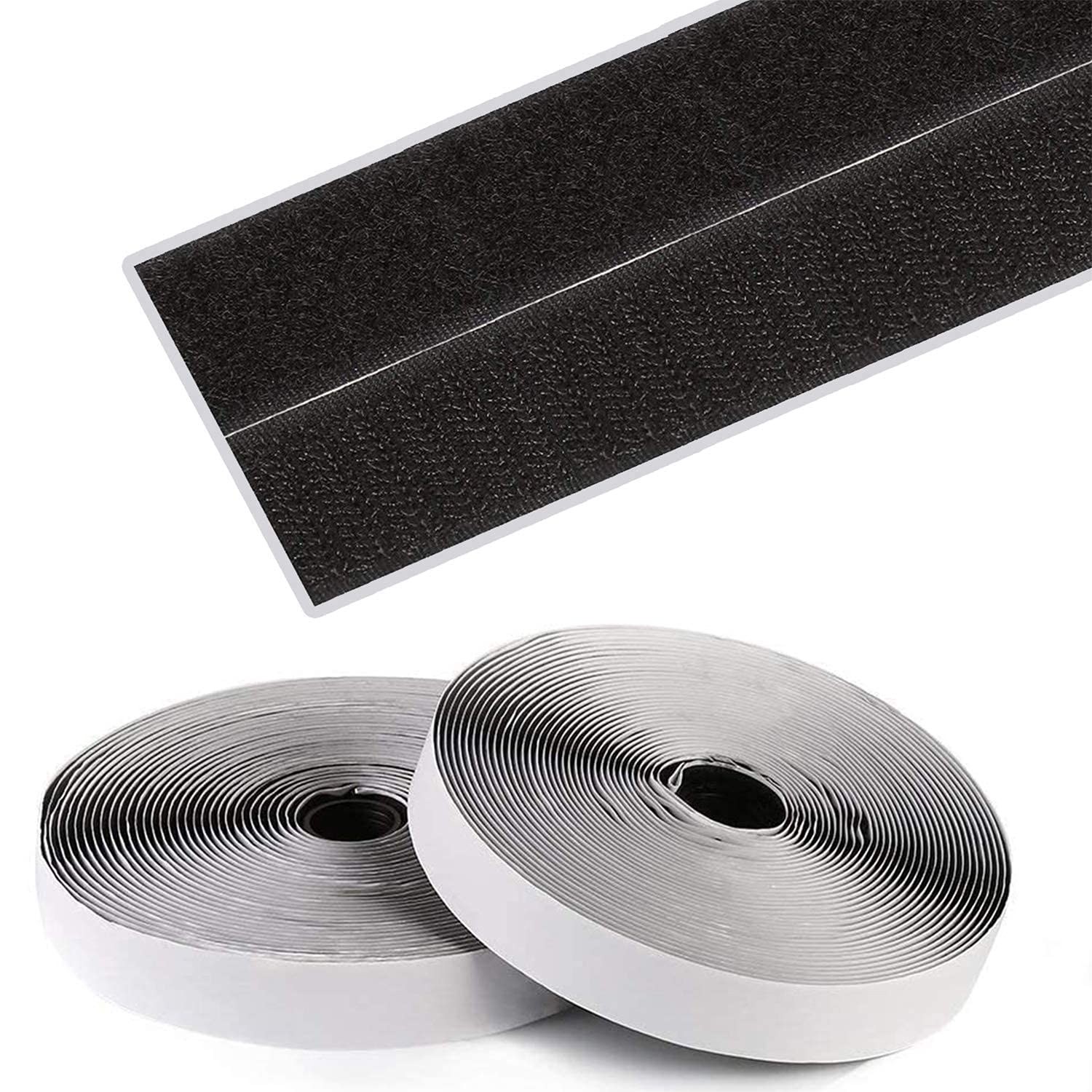
Adhesive-backed builds need their own before-and-after comparison; the adhesive layer usually moves before the fabric does.
In single-use devices, closures are normally sewn or heat-sealed; adhesive rarely carries the structural load. Where an adhesive is present, confirm the chemistry (acrylic, rubber or hot melt), the carrier and the release liner, and whether initial tack and holding power still hold after sterilization. Irradiation can cross-link or degrade some pressure-sensitive adhesives, while EO temperature and humidity can soften the layer and push adhesive past the edge. Only pre and post sterilization testing answers this; ambient peel data does not.
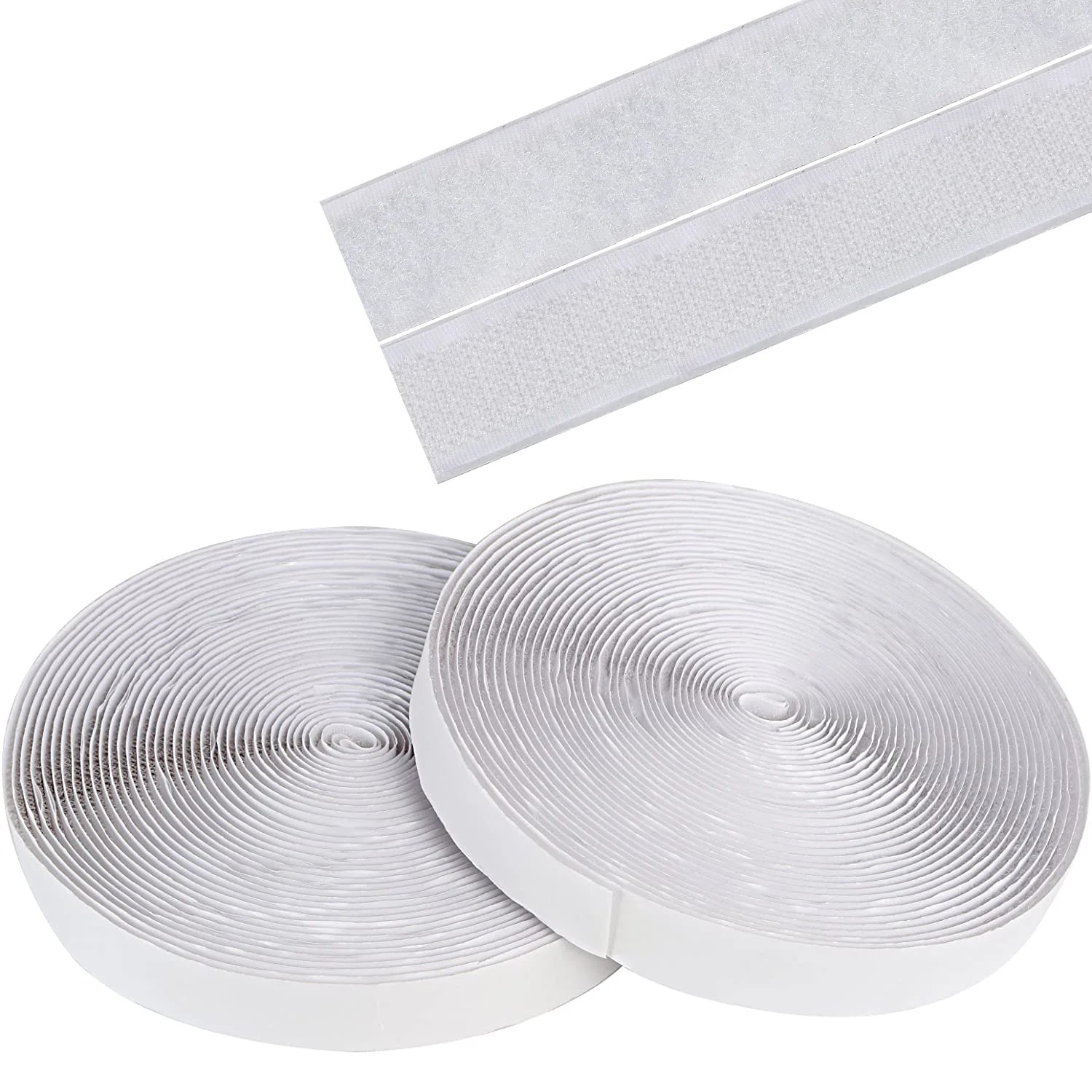
Die-cut components should be compared before and after sterilization for dimensions and edge condition as well.
Radiation-induced yellowing draws complaints fastest on white and light shades. Separate appearance change from function change: a slight shift usually does not affect closure performance, but if the customer specifies colour, write the acceptable colour difference into the specification at validation stage rather than arguing about it later. Printing ink needs the same check, since some inks fade or transfer after irradiation.
EO depends on gas permeation, so the packaging must breathe. Irradiation and moist heat set different permeability requirements, but all three demand that seal strength still passes after the cycle. If a roll is wound too tightly, gas and heat struggle to reach the inner layers, which can mean incomplete sterilization or incomplete desorption. Define packaging format and winding tension in the validation protocol instead of leaving it to the line.
Route and parameters: method, temperature, dose or concentration, number of cycles.
Material and construction: hook material, loop material, adhesive presence, lamination process.
Before-and-after data: appearance, dimensions, peel and shear, open-close cycles.
Colour and colour tolerance: whether slight yellowing is acceptable, and to what limit.
Packaging: permeability, winding tension, seal strength.
Change control: what triggers revalidation when material, dye, adhesive or process changes.
Point | Ethylene oxide | Gamma irradiation | Steam |
|---|---|---|---|
Primary action | Chemical penetration and residual desorption | Energy deposition, chain scission | Moist heat and pressure |
Material risk | Moisture uptake, residuals | Colour shift, strength loss | Hydrolysis, distortion |
Adhesive layer | May soften, edge bleed | May cross-link or degrade | May soften, lift at edges |
Colour | Limited effect | Yellowing on light shades | Limited effect |
Packaging | Must be permeable | No permeability requirement | Must resist heat and pressure |
Key validation | Residual and desorption curve | Dose, colour and strength | Cycle count and dimensional stability |
Choose the sterilization route, then the material and construction, then colour and packaging. Put those six confirmations into the specification instead of tracing a yellowing or bonding failure after the cycle. If you are working against a specific device build, send us the sterilization route, the mating substrate and the expected volume, and we will match a construction and sample to that process.


